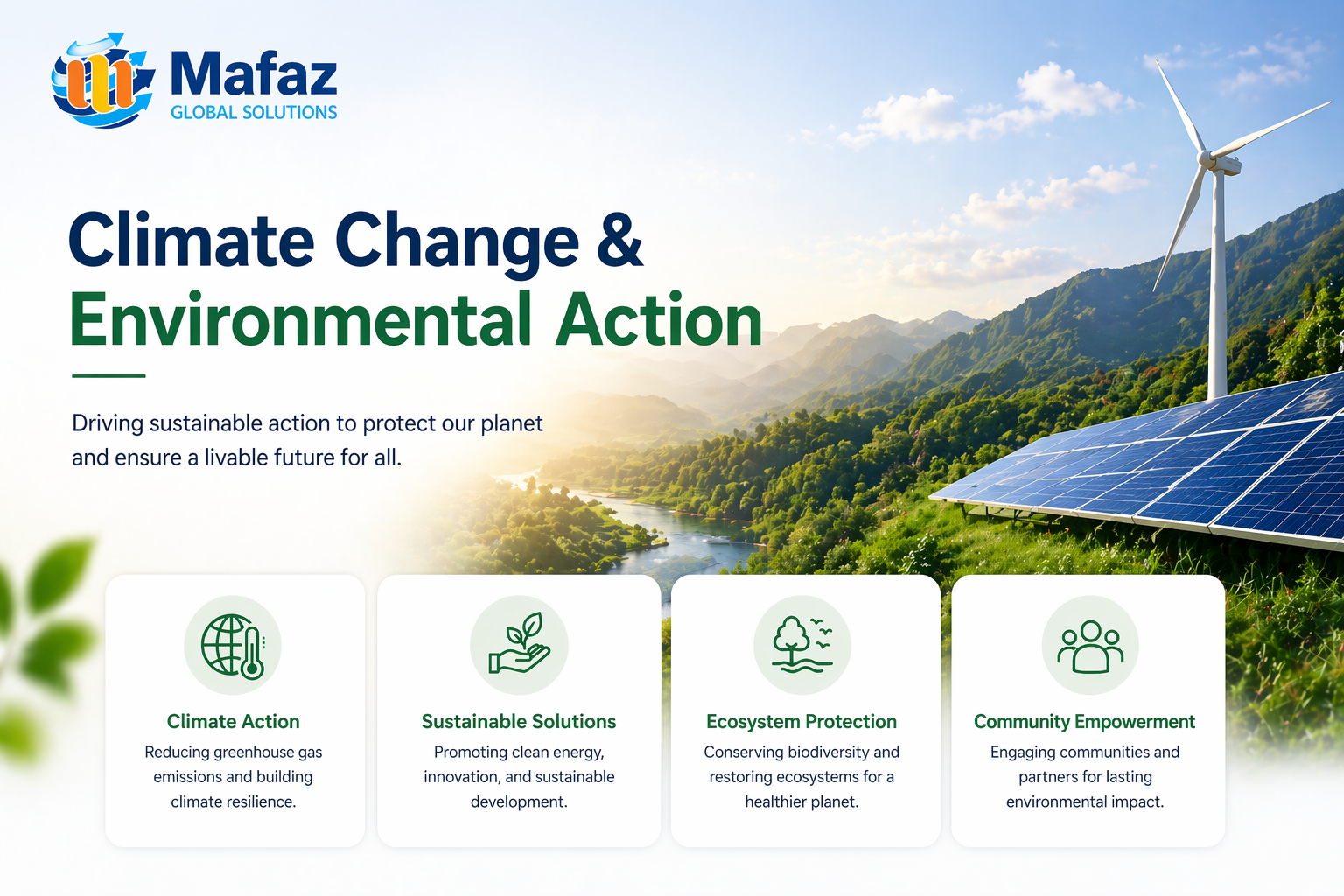
Climate change is one of the most urgent and complex challenges facing humanity today, with far-reaching impacts on ecosystems, economies, and communities worldwide. Rising global temperatures, extreme weather events, sea-level rise, and environmental degradation threaten livelihoods, food security, water availability, and public health disproportionately affecting vulnerable populations. Addressing climate change therefore requires coordinated, inclusive, and evidence-based environmental action that balances ecological protection with sustainable development.
Effective climate action begins with reducing greenhouse gas emissions while accelerating the transition toward clean, renewable energy systems. Promoting energy efficiency, expanding access to renewable energy sources, and supporting low-carbon technologies are critical steps toward mitigating climate change and achieving long-term environmental sustainability. These efforts not only reduce environmental harm but also generate economic opportunities, create green jobs, and enhance energy security.
Equally important is strengthening climate adaptation and resilience, particularly for communities most exposed to climate-related risks. Climate change already affects agriculture, water systems, and urban infrastructure, increasing the frequency and severity of floods, droughts, heatwaves, and natural disasters. Environmental action must therefore prioritize disaster risk reduction, climate-resilient infrastructure, and nature-based solutions that help communities adapt to changing environmental conditions. Integrating local knowledge and community participation is essential to ensure that adaptation strategies are inclusive, context-specific, and sustainable.
Protecting and restoring ecosystems plays a central role in addressing climate change. Forests, wetlands, oceans, and biodiversity-rich landscapes act as natural carbon sinks while supporting livelihoods and ecosystem services. Environmental action focused on conservation, reforestation, sustainable land use, and biodiversity protection helps mitigate climate impacts while preserving natural resources for future generations. Sustainable resource management—including responsible water use, waste reduction, and pollution control—is fundamental to preventing further environmental degradation.
Environmental advocacy, education, and governance are also critical pillars of climate action. Raising awareness, promoting environmental stewardship, and strengthening environmental policies empower individuals, communities, and institutions to take meaningful action. Transparent governance, evidence-based policymaking, and strong institutional frameworks support accountability and ensure that climate commitments translate into tangible results. Aligning environmental action with national priorities and global frameworks, such as the Sustainable Development Goals and international climate agreements, enhances coherence and impact.
Ultimately, climate change and environmental action demand collective responsibility and long-term commitment. By fostering partnerships among governments, civil society, the private sector, and local communities, sustainable solutions can be scaled and sustained. Protecting the environment is not only an ecological imperative but also a foundation for economic stability, social well-being, and intergenerational equity. Through inclusive, strategic, and sustained environmental action, societies can build a more resilient, sustainable, and livable future for all.