
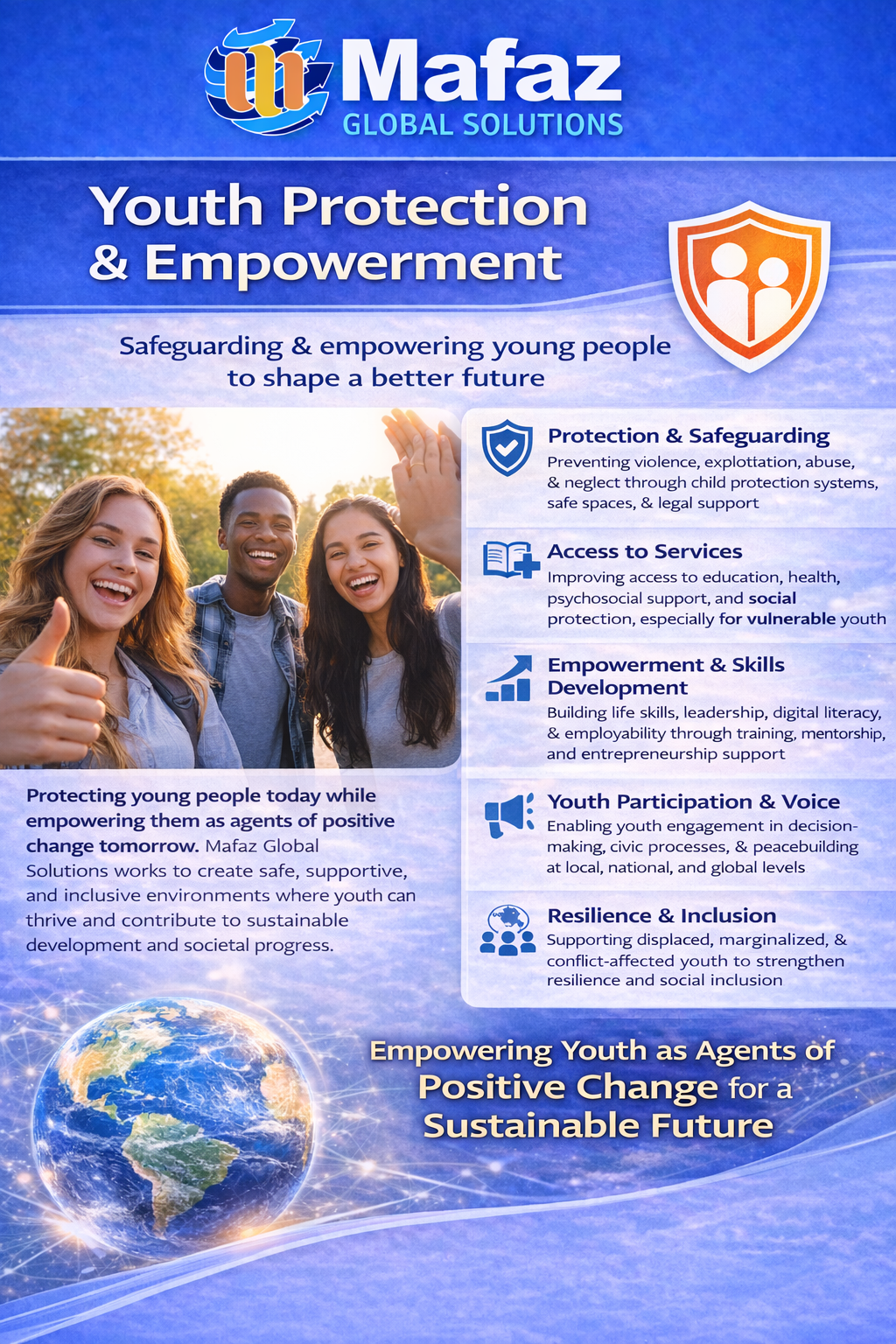
Youth Protection & Empowerment is central to building peaceful, resilient, and inclusive societies, particularly in contexts affected by conflict, fragility, and instability. Young people face multiple and interconnected risks that threaten their safety, dignity, and future, including violence, exploitation, abuse, and illegal recruitment into armed groups. Protecting youth from these threats while empowering them with opportunities, skills, and a voice in society is essential for sustainable development and long-term stability.
One of the most serious protection concerns facing youth today is the illegal recruitment and use of underage individuals by armed groups, militias, and criminal networks. Children and adolescents are often targeted due to poverty, displacement, lack of access to education, family separation, and weak protection systems. In many cases, recruitment occurs through coercion, intimidation, or abduction, while in others it is driven by manipulation, misinformation, or false promises of income, security, and belonging. Once involved, underage youth may be forced to carry weapons, participate in violence, or support armed activities, exposing them to extreme physical danger and psychological trauma.
The impact of such experiences is profound and long-lasting. Exposure to armed violence disrupts education, damages mental health, and undermines social development, often leaving youth stigmatized and excluded from their communities. These harms extend beyond the individual, weakening families, eroding social cohesion, and perpetuating cycles of violence and insecurity. Addressing illegal recruitment is therefore not only a protection priority but also a critical peacebuilding and development imperative.
Youth Protection & Empowerment responds to these challenges through prevention, support, and long-term solutions. Strengthening child and youth protection systems at community and institutional levels is key to identifying risks early and creating safe environments where young people are protected from harm. Awareness-raising, community engagement, and collaboration with families, schools, civil society, and local leaders play a vital role in preventing recruitment and reducing vulnerability.
Empowerment is equally essential in breaking the conditions that expose youth to exploitation. Access to quality education, psychosocial support, life skills, vocational training, and livelihood opportunities provides young people with viable alternatives to armed involvement and restores hope for the future. Empowered youth are better equipped to make informed choices, resist manipulation, and contribute positively to their communities. Supporting youth participation in civic engagement, peacebuilding, and decision-making processes further reinforces their role as agents of change rather than victims of conflict.
For youth affected by armed recruitment, reintegration and recovery are critical. Comprehensive support that includes psychosocial care, education, skills development, and community reconciliation helps young people rebuild their lives and reduces the risk of re-recruitment. Inclusive, youth-centered approaches ensure dignity, resilience, and long-term reintegration.
Ultimately, Youth Protection & Empowerment is about safeguarding rights while unlocking potential. By protecting young people from illegal recruitment and violence and investing in their skills, wellbeing, and leadership, societies can transform vulnerability into strength and empower youth to drive peace, stability, and sustainable development.